How Macro Events Affect Crypto Markets
Learn how interest rates, inflation, the dollar and major economic releases affect Bitcoin, crypto volatility, liquidity and trading decisions.


Live market data
Bitcoin / U.S. Dollar
BTCUSD · Massive · X:BTCUSD
84,378.31 USD
2.81 (0.00%)
Previous
84,375.50
Open
84,384.60
High
84,401.20
Low
84,340.00
Volume
1.687
Updated 24/09/2026, 23:05:55. Market data is informational and may be delayed.
Crypto markets do not trade in isolation. Interest rates, inflation expectations, central-bank decisions, employment data and the strength of the US dollar can all change the conditions in which Bitcoin and other digital assets are priced. Understanding this macro relationship helps traders separate a genuine market shift from short-term noise.
Why macro events matter for crypto
Macro data influences the cost of capital and the willingness of investors to hold risk. When financial conditions become tighter, speculative assets can face less demand. When liquidity expectations improve, risk appetite can return. The relationship is not mechanical, but the broader regime matters.
Bitcoin is often treated as a risk-sensitive asset, especially when markets are focused on rates and liquidity. That does not mean every economic release produces the same reaction. The result depends on what investors expected, how positioning was built beforehand and how the release changes the path of monetary policy.
Interest rates, inflation and the dollar
Interest rates affect the opportunity cost of holding non-yielding assets and influence valuations across risk markets. Higher-for-longer expectations can pressure speculative assets, while expectations of easier policy can support risk appetite. These relationships can change quickly when new data shifts the expected policy path.
Inflation data matters because it can change expectations for future interest rates. A softer reading may support the idea that policy can become less restrictive, while a hotter reading can revive concerns about tighter conditions. The market response depends on the surprise relative to consensus, not just whether the headline looks positive or negative.
The US dollar is another important variable. Because Bitcoin and many other assets are quoted in dollars, a stronger dollar can coincide with tighter global financial conditions. Dollar strength is not a standalone trading signal, but it is useful context when evaluating crypto volatility and risk appetite.
Which macro releases deserve attention?
Not every calendar event deserves the same weight. Focus on releases that can alter expectations for rates, liquidity or economic growth. Common examples include inflation reports, employment data, central-bank decisions, policy statements, purchasing manager surveys and major growth indicators.
The importance of an event also depends on the current regime. A release may have little impact when markets are stable and expectations are well anchored, but the same release can create a sharp move when positioning is crowded or liquidity is thin.
Consensus, surprise and market reaction
Markets usually react to the difference between the published number and the consensus expectation. A seemingly strong result can produce a negative reaction if investors expected an even stronger number. Revisions, details inside the release and the central-bank interpretation can matter as much as the headline.
The first move after a release can be noisy. Liquidity may thin, spreads can widen and stop orders can trigger before a clearer direction appears. Instead of treating the first candle as a complete signal, observe whether price accepts or rejects the move and whether related markets confirm the reaction.
A practical framework for trading around macro events
Start by checking the economic calendar before planning a trade. Mark the event time, the expected volatility and the assets most sensitive to the release. Then compare the consensus with the actual result once it is published.
Next, reassess the market structure. Is Bitcoin trending, ranging or already extended? Did the release change the higher-timeframe thesis, or did it only create a short-lived volatility spike? A technical setup should be reviewed again when the macro regime changes.
Finally, reassess invalidation and position size. If spreads widen or liquidity disappears, the original execution assumptions may no longer be valid. Waiting for a retest or reducing exposure can be more disciplined than forcing a trade during the first burst of volatility.
Macro events and liquidity are closely connected. Read What Market Liquidity Means for Bitcoin to understand depth, slippage and order flow.
How macro context improves a crypto trade setup
Macro awareness should support, not replace, technical analysis. A well-defined setup still needs a clear entry condition, invalidation level, target and risk limit. Macro context helps determine whether the environment is suitable for that setup and whether additional confirmation is necessary.
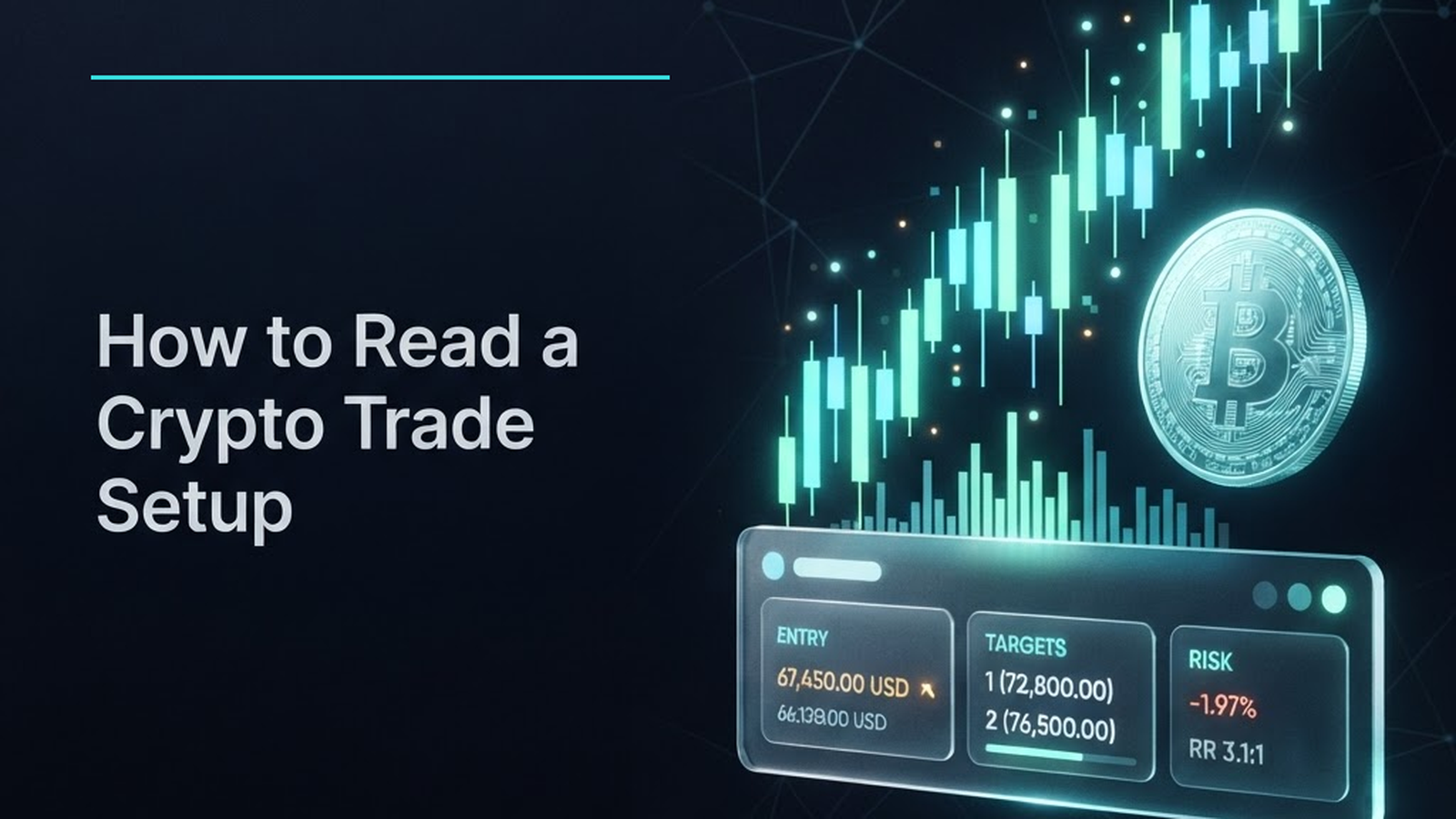
For the complete setup framework, read How to Read a Crypto Trade Setup.
Weekly macro checklist
Review the economic calendar before the trading week begins.
Mark the week’s major rates, inflation, employment and central-bank catalysts.
Record the consensus expectations and compare them with the previous reading.
Note whether Bitcoin is trending, ranging or already extended before the event.
Plan how you will handle wider spreads, slippage and sudden volatility.
Reduce exposure when expected volatility is larger than your risk plan allows.
The most useful macro process is repeatable: prepare before the event, observe the market reaction and only then decide whether a technical setup still offers defined risk. No macro indicator guarantees a market outcome. This article is educational information and not financial advice.
PRACTICAL FRAMEWORK
Key takeaways
A strong setup explains the context, the entry area, the invalidation level and the expected path before any decision is made.
Use this section as a final review: define risk first, check the surrounding market structure and avoid treating a single indicator as a guarantee.
Want setups like these in real time?
Join the VIP channel for daily crypto & gold signals.

10% Cashback on Trading Fees — Ongoing
Get 10% cashback on eligible trading fees, plus additional daily-task bonuses through BloFin. Join through our partner link and check the current offer terms before trading.
Claim 10% cashbackCompare Crypto Exchanges
Explore our exchange selection and compare platforms, fees, KYC access, and features.
View exchange comparison