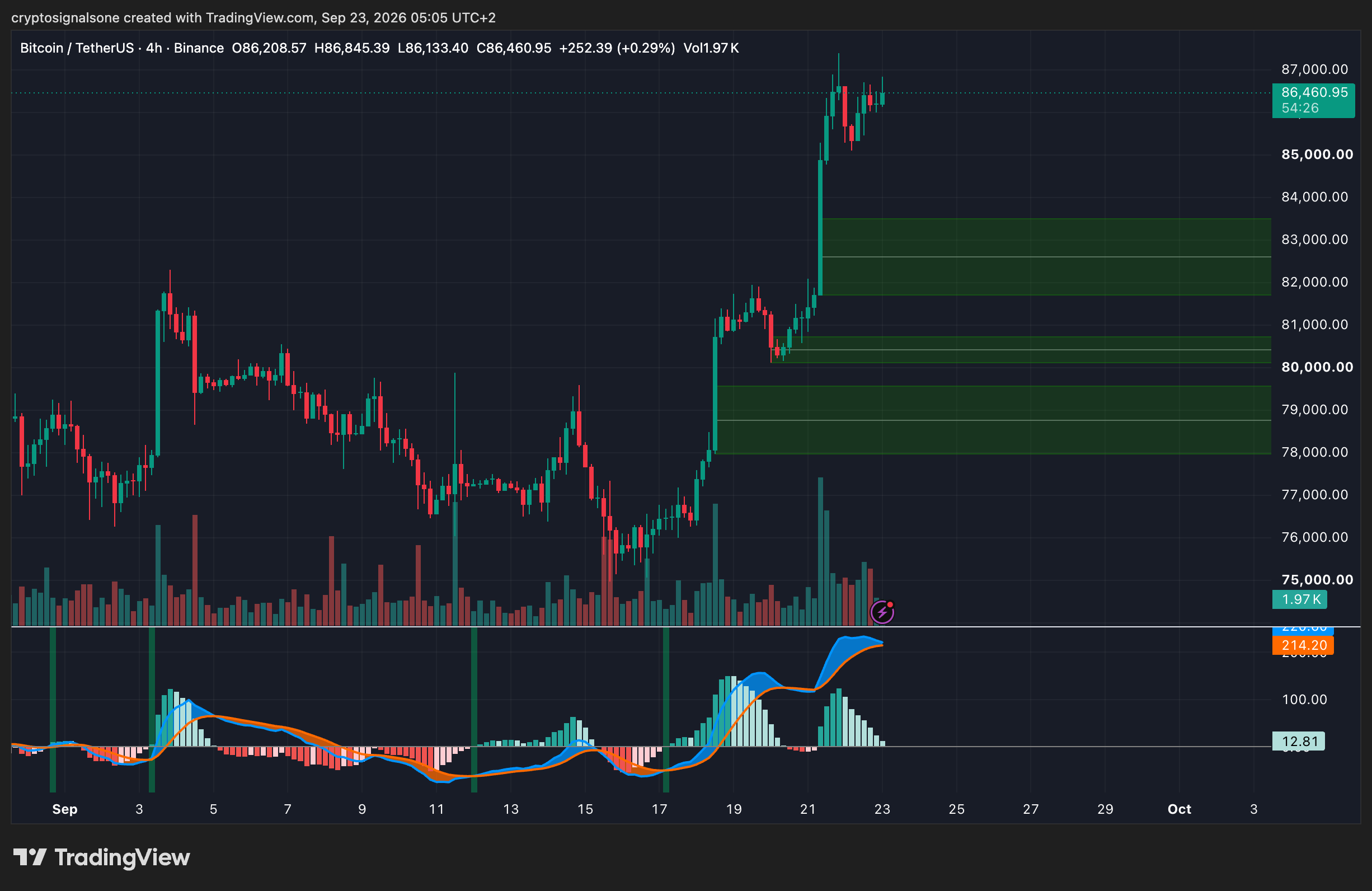
How to Read a Crypto Trade Setup
Learn how to read a crypto trade setup with a practical framework for market context, entry, invalidation, targets, liquidity and risk management.

A crypto trade setup is more than a direction and a ticker. A professional setup explains why an opportunity exists, what would make the idea valid, where the thesis fails and how the trade fits the wider market. This framework helps you evaluate a setup before execution instead of reacting to a chart after the move has already happened.
What is a crypto trade setup?
A trade setup is a defined market hypothesis. It combines context, a potential entry, invalidation, targets and a risk plan. The purpose is not to predict every Bitcoin move. The purpose is to create a repeatable decision process where the possible loss is known before capital is exposed.
A strong setup should answer five questions: What is the market doing? Why is this level important? What confirms the idea? Where is the thesis invalidated? What would make the trade unattractive? If those questions cannot be answered clearly, the setup is still an observation rather than a trade plan.
Start with market context
Before looking for an entry, define the environment. Is Bitcoin trending, ranging or reacting to a catalyst? Review the higher-timeframe structure first, then move down to the timeframe where the trade would be managed. A setup that looks attractive in isolation can lose its edge when the wider market is moving against it.
Trend: identify whether price is making higher highs and higher lows, lower highs and lower lows, or remaining inside a range.
Volatility: note whether price is expanding or compressing, because the same stop distance behaves differently in each regime.
Liquidity: identify obvious highs, lows and areas where stops or resting orders may be concentrated.
Catalysts: check scheduled macro events, major market announcements and session openings before choosing an entry.
Define the thesis and the entry
The thesis should be specific enough to test. Instead of saying that Bitcoin looks bullish, define the condition that supports the idea: a reclaim of a level, a break from a range, a higher low or a reaction from a known liquidity zone. The entry should follow that condition rather than anticipate it without confirmation.
Confirmation does not mean waiting for certainty. It means deciding in advance what evidence is relevant. Depending on the strategy, that evidence might be acceptance above a level, a failed breakdown, a change in market structure or a retest with controlled volatility.
Invalidation comes before targets
Invalidation is the level or condition that proves the trade idea wrong. Decide it before entering, not after price moves against you. A technical invalidation should relate to the reason for the trade; it should not be placed at an arbitrary distance simply to avoid taking a loss.
Once invalidation is clear, position size can be calculated from the amount of capital you are prepared to risk. This is more reliable than choosing a position first and then moving the stop to make the numbers appear comfortable.
Targets, liquidity and trade management
Targets should connect to market structure, previous highs and lows, imbalance zones, volume areas or likely liquidity pockets. Avoid selecting a target only because it creates an attractive risk-to-reward ratio. A target is useful when price has a realistic reason to interact with that area.
Plan what happens after entry. If price reaches the first objective, will you reduce exposure, move the stop, or let the remaining position run? If the market becomes illiquid or a macro event approaches, will you close early or reduce size? Writing these decisions before the trade helps prevent emotional improvisation.
Liquidity often explains why a clean-looking setup fails or accelerates. For a deeper explanation, read What Market Liquidity Means for Bitcoin.
A repeatable pre-trade checklist
Use this checklist before considering a position:
What is the higher-timeframe trend or range?
What market structure or catalyst creates the opportunity?
Where is the thesis invalidated?
How much capital is at risk if invalidation is reached?
Where are the likely liquidity zones and execution risks?
Which event or change in conditions would make you skip the trade?
The goal is not to make every trade profitable. The goal is to make the decision process clear enough that good decisions are repeatable and bad decisions are measurable. No setup guarantees a result. Crypto markets are volatile, and this article is educational information rather than financial advice.
PRACTICAL FRAMEWORK
Key takeaways
A strong setup explains the context, the entry area, the invalidation level and the expected path before any decision is made.
Use this section as a final review: define risk first, check the surrounding market structure and avoid treating a single indicator as a guarantee.
RISK FIRST
Risk checklist
Before acting, confirm that the thesis is clear, the invalidation is defined and the position size matches the risk you are willing to accept.
Market conditions can change quickly around macro releases and liquidity shifts. This content is educational and is not a promise of outcome or financial advice.
CONTINUE READING
Continue your market research
Explore the other Crypto Signals One guides to understand liquidity, macro events and structured crypto market analysis in context.
Want setups like these in real time?
Join the VIP channel for daily crypto & gold signals.

Trade Crypto with Bonus
Get a trading bonus when you join WEEX through our partner link.
Trade on WEEXCompare Crypto Exchanges
Explore our exchange selection and compare platforms, fees, and features.
View exchange comparison